12 minute readPillar piecePublished May 6, 2026
Every culture has built systems for understanding wellness, illness, and the relationship between body, mind, and spirit. The map of who is known for what is imperfect, but useful for seekers narrowing where to begin.
On this page
- India: yoga, Ayurveda, and the philosophical traditions
- China and Tibet: traditional Chinese medicine, qigong, and Tibetan Buddhism
- Japan: Reiki, Zen, forest bathing, and martial-spiritual practice
- The Indigenous Americas: plant medicine, ceremony, and shamanic lineages
- The Mediterranean and Middle East: Hippocratic medicine, Sufism, and contemplative lineages
- Africa: diverse healing traditions across the continent
- Modern Western contributions: somatic therapies, clinical hypnosis, and the wellness industry
- What this map cannot show
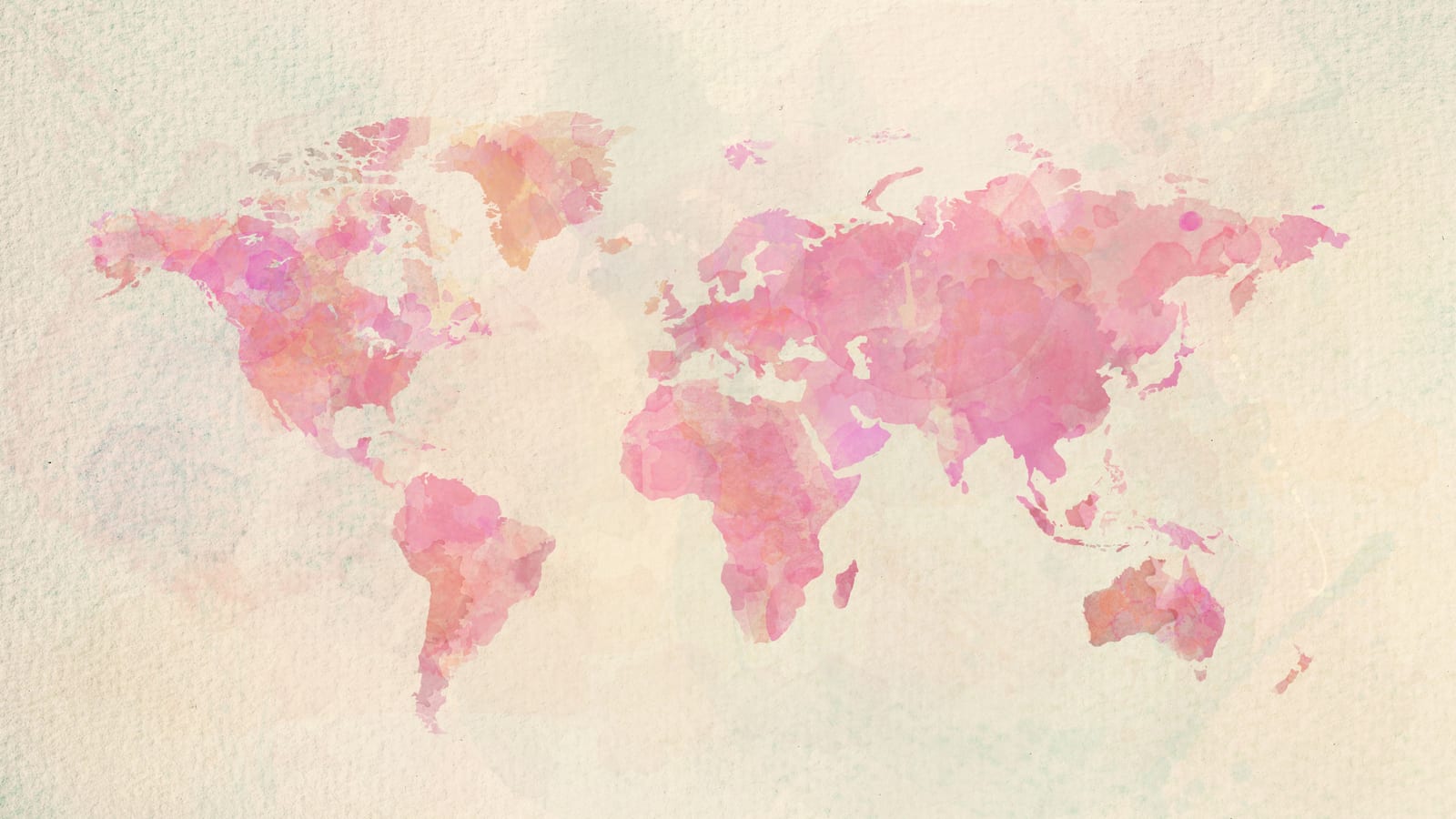
Every culture has built systems for understanding wellness, illness, and the relationship between body, mind, and spirit. The map of who is known for what is not a perfect frame. Lineages cross borders. Traditions blend into each other across centuries. Some of the most accomplished practitioners working today live thousands of miles from the country their tradition is associated with. The country categories below are anchor points, not boundaries.
For a seeker trying to narrow where to begin, though, the map is useful. It names where things came from, who carries them now, and where the gaps in Western coverage tend to live. What follows is a worldwide tour of the holistic traditions, the lineages they sit inside, and the modalities they have given to contemporary practice. For the broader question of how a spiritual concierge works across these traditions, that piece sits alongside this one.
India: yoga, Ayurveda, and the philosophical traditions
India is the source of the largest body of holistic practice in continuous use today. The lineages reach back several thousand years and have been remade, codified, and exported many times since.
Yoga in its philosophical form descends from the Yoga Sutras of Patanjali and the broader teachings collected in the Upanishads, the Bhagavad Gita, and the tantric texts. The eight limbs of yoga, including the physical postures most Western practitioners encounter first, sit inside an architecture that names ethics, breath, sense withdrawal, concentration, meditation, and absorption as equal parts of the practice. The contemporary asana traditions, including Iyengar, Ashtanga, Vinyasa, Yin, and Kundalini, all emerge from this tree, and our comparison of yoga styles covers the eight most common branches a seeker will encounter today.
Pranayama, the disciplined work with the breath, is an Indian contribution that has shaped almost every modern breathwork lineage. Our piece on breathwork explained traces how pranayama techniques travelled into the West and were renamed and recombined.
Ayurveda is India's medical tradition. Five-thousand-year continuous lineage, three constitutional types (vata, pitta, kapha), a deep herbal pharmacopoeia, and an architecture for daily and seasonal practice that is still taught and practised across the subcontinent. Our comparison of Ayurveda and Traditional Chinese Medicine herbalism goes into how the two systems differ and where they overlap.
The contemporary Indian teachers who have shaped Western practice, from Krishnamurti through Iyengar through more recent figures, sit inside long lineages and disagreements with those lineages. Naming them is part of taking the tradition seriously. Treating them as the tradition is not.
China and Tibet: traditional Chinese medicine, qigong, and Tibetan Buddhism
Traditional Chinese medicine is the second of the great medical systems still in continuous use today, and it sits next to Ayurveda in any honest map. Acupuncture, herbal formulae, dietary therapy, tui na (massage), and the diagnostic framework of yin and yang, the five elements, and the meridian system together form a coherent system with continuity reaching back at least two thousand years. TCM herbalism is covered alongside Ayurveda in our piece on the two great Eastern medical traditions.
Qigong is a movement-meditation system distinct from yoga in lineage but adjacent in function. Slow, often standing, sometimes seated, oriented around cultivating and circulating qi (life energy) through the body's meridians. Tai chi is the most widely practised qigong-adjacent form in the West, but the broader qigong tradition contains many branches, some martial, some meditative, some medical.
Tibetan Buddhism contributes a distinct meditation lineage, including the Mahayana and Vajrayana traditions, the Mahamudra and Dzogchen lineages, and a deep tradition of working with the mind that has crossed into Western contemplative practice. Tibetan medicine, called Sowa Rigpa, sits alongside Ayurveda and TCM as a third great Asian medical system.
The singing bowl tradition often called Tibetan is more accurately a Newari and Nepali metalworking tradition, adapted for contemplative use across the broader Himalayan region. Our piece on sound healing demystified goes into the specific lineages and where the contemporary marketing has obscured them.
Japan: Reiki, Zen, forest bathing, and martial-spiritual practice
Japan's contributions are distinctive, and most of them are younger than they look.
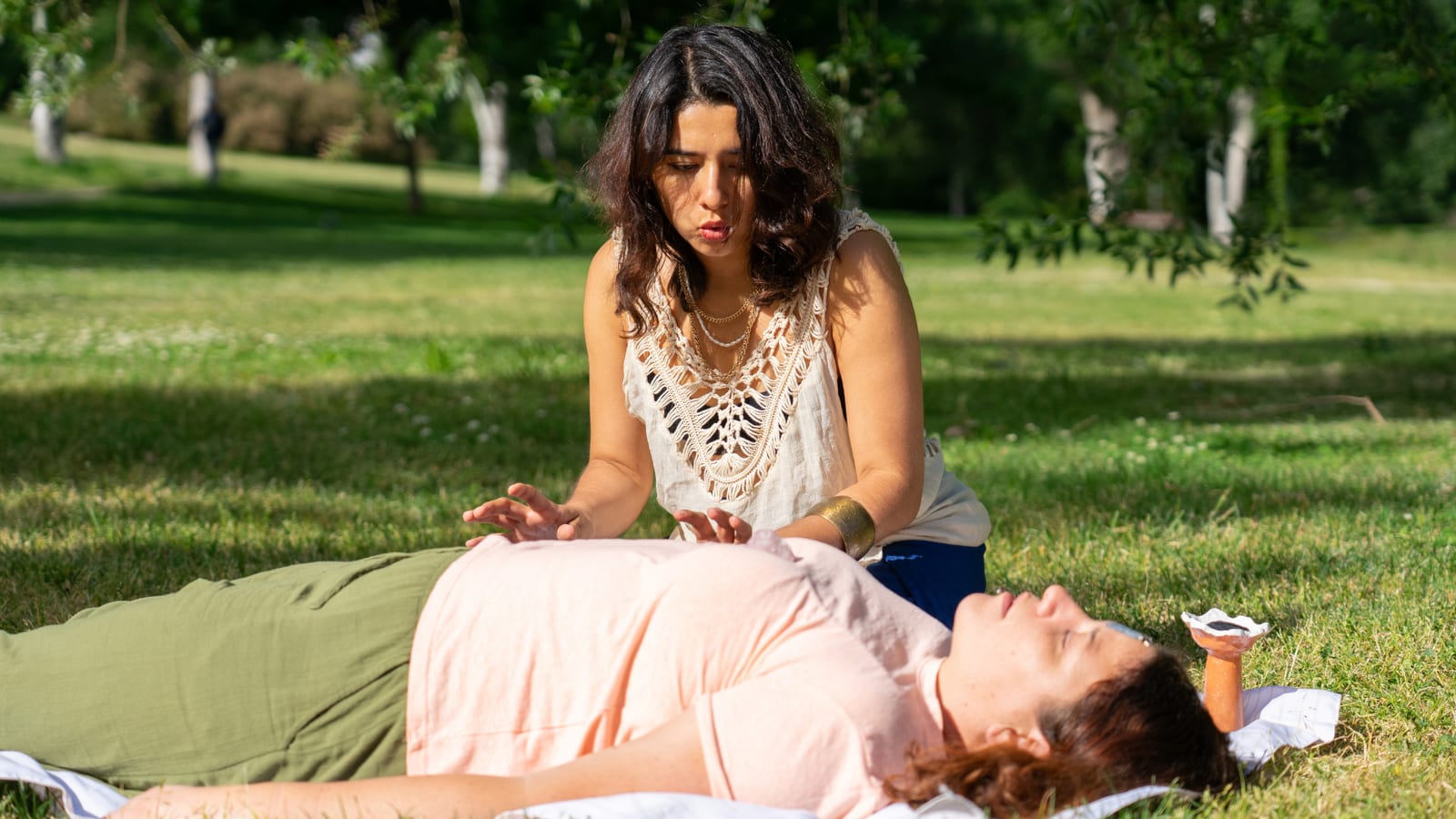
Reiki, despite a contemporary marketing tendency to describe it as ancient, was developed by Mikao Usui in 1922. The tradition has a clear, named lineage running from Usui through Chujiro Hayashi to Hawayo Takata, and the attunements that pass between teacher and student are how lineage is carried forward today. Our piece on Reiki covers what is actually transmitted and how a real lineage looks on inspection.
Mikao Usui (1865 – 1926) → Chujiro Hayashi (1880 – 1940) → Hawayo Takata (1900 – 1980) → the Western Reiki lineages. Most contemporary Reiki teachers can trace their attunement to one of these named figures.
Zen Buddhism is the Japanese transmission of Chinese Chan, refined into a distinctive lineage with its own emphasis on zazen (seated meditation), koan work, and direct teacher-student transmission. Soto and Rinzai are the two largest schools, with Obaku as a third. The Zen tradition has shaped Western mindfulness practice as much as any single source, often without the lineage being named.
Shinrin-yoku, often translated as "forest bathing," is a Japanese practice of slow, sensory-attentive time in forested environments. The term was coined in 1982 by the Japanese Ministry of Agriculture, Forestry and Fisheries, and a substantial body of research on its health effects has been produced in Japan since.
Aikido is a martial-spiritual practice founded by Morihei Ueshiba in the early twentieth century, drawing on older jujitsu traditions and Ueshiba's own contemplative training. Karate-Do, judo, and kendo all sit in the same broader lineage of Japanese martial arts as paths of cultivation, not only as fighting systems.
The Indigenous Americas: plant medicine, ceremony, and shamanic lineages
The Indigenous traditions of the Americas hold the deepest plant medicine lineages in the world and a body of ceremonial knowledge that has been suppressed, hidden, and only partially recovered. Engagement with these traditions carries real responsibilities, and the engagement question is taken up in detail in our piece on plant medicine integration.
Mexico
Temazcal (sweat lodge) traditions are practised across many Indigenous Mexican nations, with significant variation in protocol, song, and purpose. The Mazatec mushroom curandera lineage, made famous in the West through María Sabina, sits inside a protected and contested tradition that the West largely failed to engage with respect. Copal is used as a ceremonial incense across the Mesoamerican region. Peyote (hikuri) is sacred to the Wixárika (Huichol) nation and is protected by specific legal frameworks that recognize its religious use within those communities.
Peru
Ayahuasca traditions in Peru include the vegetalismo lineages of the Amazonian basin, the Shipibo-Konibo tradition with its ikaros (medicine songs), and the Quechua-speaking traditions of the highlands. San Pedro (huachuma) is a separate cactus medicine practised in Andean contexts, often in daytime ceremonies that contrast with the nocturnal ayahuasca tradition. The dieta, a structured plant retreat with specific dietary and behavioural restrictions, is the master-plant training that genuine vegetalistas undertake before holding ceremony.
Brazil
Brazil is the country where ayahuasca is most thoroughly legalized within syncretic religious contexts. Santo Daime, União do Vegetal, and Barquinha are the three main churches, each with their own theological framing and ceremonial structure. Capoeira combines movement, music, and martial practice in a tradition rooted in Afro-Brazilian history. Candomblé carries Yoruba and other West African religious traditions across the Atlantic, preserved through enslavement and continuing today.
North America
The diverse Indigenous nations of what is now the United States and Canada hold their own healing practices, including sweat lodge, sun dance, talking circle, and pipe ceremonies. Protocols around non-Indigenous participation differ between nations and are best engaged through invitation from the relevant community, not through commercial offerings.
The Mediterranean and Middle East: Hippocratic medicine, Sufism, and contemplative lineages
Greek medicine under Hippocrates and Galen produced the four-humour system that became the basis of Western herbalism for nearly two millennia. The lineage is still visible in contemporary Western herbal traditions, particularly in the Mediterranean herbalism that crossed into early-modern European practice.
Egypt contributed an early herbal pharmacopoeia, with Imhotep figuring as a foundational physician-priest in the third millennium BCE. The Egyptian and Mesopotamian medical traditions influenced Greek medicine and travelled westward through the Hellenistic period.
The Persian and broader Islamic world produced the Sufi traditions, from Rumi and Ibn Arabi through the surviving tariqas (orders) practised today. Dhikr (the practice of remembrance through repeated phrase or breath), whirling within the Mevlevi tradition, and the broader Sufi corpus are still taught by living teachers across many countries.
Christian mysticism contributed the Hesychast tradition of the Eastern Orthodox church, the contemplative monastic lineages of the Catholic west (Carthusians, Cistercians, the Carmelite tradition), and the apophatic theology of figures like the Pseudo-Dionysius and Meister Eckhart. These lineages have produced practitioners and teachers continuously into the present day.
The broader Middle East and North Africa hold many further traditions that this map only touches. Sacred dance, recitation, and dream-work practices are carried within these lineages and sometimes appear in Western settings under more generic labels.
Africa: diverse healing traditions across the continent
Africa is not one culture, and African traditional medicine is not one tradition. West African herbalism and divination traditions, including the Ifa system practised among the Yoruba, the Akan healing systems, and the broader West African herbal pharmacopoeias, have been studied less in Western literature than they deserve, despite supplying knowledge that informed both ancient and modern medicine.
The Sangoma traditions of Southern Africa, including Zulu, Xhosa, and other nations, carry their own diagnostic and healing frameworks. Ethiopian and Eritrean Christian contemplative traditions sit alongside Coptic Christian traditions in Egypt as long contemplative lineages.
The diaspora carrying African traditions across the Atlantic produced candomblé in Brazil, Santería in Cuba, Vodou in Haiti, and other syncretic religious traditions that preserved African religious practice through enslavement and continue as living traditions today. The plant knowledge held in these diaspora lineages, and the divinatory and ceremonial systems that travelled with them, are an active body of practice today, not a historical artifact. A serious map of contemporary holistic traditions has to count them, even when the Western literature has barely begun to.
The North African Berber and Tuareg healing traditions, the Ethiopian Orthodox monastic lineages, and the Sufi tariqas of the Maghreb sit at the meeting point of African, Arab, and Mediterranean practice. They are reminders that the continent's traditions have been in conversation with Mediterranean and Middle Eastern lineages for millennia, not in isolation from them.
Modern Western contributions: somatic therapies, clinical hypnosis, and the wellness industry
The twentieth-century West produced a distinct set of body-based therapies that now form a significant part of contemporary integration practice. Hakomi, founded by Ron Kurtz in the 1970s in the United States, drew on Buddhist principles and body-based methods. Somatic Experiencing, founded by Peter Levine in the 1970s, emerged from research on trauma and the autonomic nervous system. Sensorimotor Psychotherapy, founded by Pat Ogden, integrated somatic methods with psychotherapy training. Internal Family Systems, founded by Richard Schwartz in the 1980s, offered a parts-based framework that has become central in contemporary therapy. Our piece on somatic therapy covers each of these in depth.
Modern breathwork lineages also developed in this period. Holotropic breathwork was developed by Stanislav and Christina Grof in California in the 1970s. The Wim Hof Method emerged from the Netherlands in the early 2000s, drawing on Tummo and other traditional cold-and-breath practices. Both lineages are covered in our breathwork piece.
Clinical hypnosis is a Western medical contribution with several centres of gravity. Milton Erickson's lineage in the United States, the French clinical tradition running from Charcot through to contemporary practice, and the British Society of Clinical and Academic Hypnosis are the three most influential current lines. Our hypnotherapy piece traces what is actually evidence-based and where the cultural picture distorts it.
The contemporary wellness industry is a global commercial synthesis of all of the above, and its complications are real. It produces accessibility, including for traditions that would otherwise remain inaccessible to Western seekers. It also produces flattening, in which lineage is lost, source communities are uncredited, and the work is repackaged into formats that travel well at the cost of fidelity.
A tradition is held by people who study under a teacher. A market is sold by people who study a customer.
This is the live tension contemporary practice sits inside. Most serious practitioners working today move between the two registers carefully, and the more honest among them name the difference rather than collapsing it.
What this map cannot show
Living traditions are not museum pieces. Every one of the lineages above is changing, has changed before, and will continue to change. Many of the most powerful practitioners working today are not in the country their tradition is associated with. The country frame is a useful starting point. It is not the end of the question.
What the map can do is help a seeker narrow where to begin. What it cannot do is name the specific teacher who is the right fit for the specific seeker. That decision belongs to a different question, and our piece on how to choose a practitioner takes it up directly. Once a tradition resonates, the next question is how to find a real teacher inside it.