10 minute readComparison guidePublished May 6, 2026
Breath is the bridge between voluntary and autonomic nervous systems. Five widely-taught methods do quite different things with that bridge. Choosing well means knowing what each is for and where it is contraindicated.
On this page
Breath is one of the few bodily systems that operates both voluntarily and autonomically. The body breathes whether or not the mind is paying attention. The mind can also take the breath in hand and lengthen it, slow it, hold it, accelerate it, redirect it. That dual access — autonomic when ignored, voluntary when attended to — is the bridge that breathwork practices use.
The bridge is real. The mechanisms are reasonably well understood. The methods, however, are more varied than most newcomers realize. "Breathwork" in 2026 is an umbrella term covering at least a dozen distinct lineages, each with its own protocol, history, and intent. A Wim Hof session and a Holotropic session both involve hyperventilation, but the experiences are not the same and the contexts are not interchangeable.
This piece walks through five widely-taught methods, names where each came from, what it produces, and where to be careful.
The breath as a bridge
A short physiological note before the methods, because it explains why they work and where they fail.
The autonomic nervous system has two branches: sympathetic (activation, alertness, fight-or-flight) and parasympathetic (rest, digest, recover). The breath influences both. Long, slow exhalations stimulate the vagus nerve and activate the parasympathetic branch. Fast, deep breathing tilts the body toward sympathetic activation, lowers carbon dioxide levels, and shifts the blood's pH (respiratory alkalosis). The first effect produces calm. The second produces tingling, lightheadedness, sometimes tetany, and at the deeper end, altered states of consciousness.
Most breathwork methods are some combination of slow-down and speed-up, with different ratios and intentions.
The earliest formalized breath practice in continuous use is yogic pranayama, with written references in the Yoga Sutras of Patanjali (roughly 200 BCE to 400 CE) and detailed elaboration in the Hatha Yoga Pradipika (15th century). Western breathwork is, in comparison, less than a century old.
What distinguishes the methods is which side of the bridge they emphasize, how long they sustain it, and what context they sit in. The five methods below differ on all three dimensions.
The five methods
Pranayama (yogic)
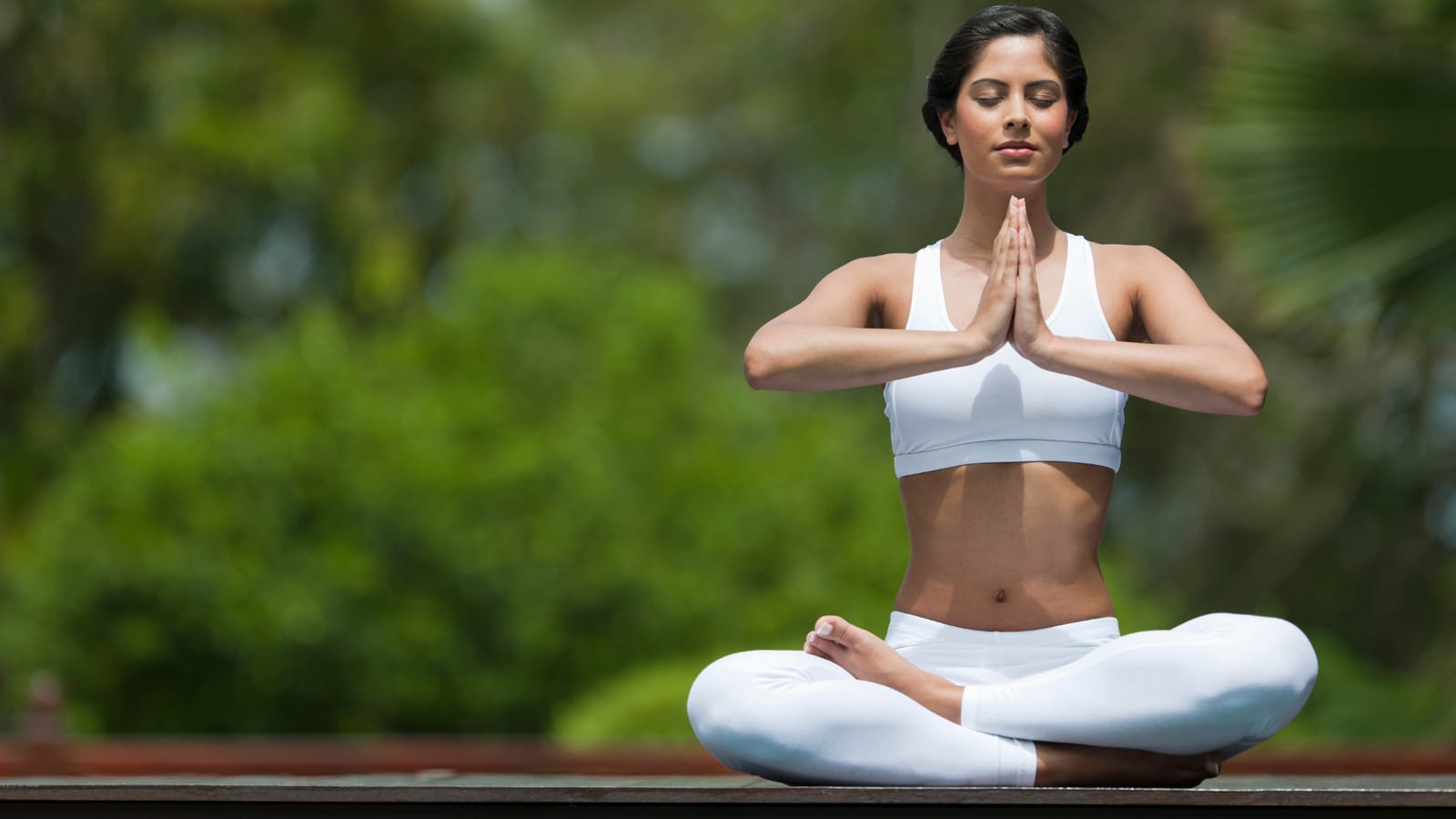
Pranayama is the breath dimension of classical yoga. The word means roughly "extension of life-force": prana (life-force, breath) and ayama (extension, restraint). The system has been practiced and taught continuously for at least fifteen hundred years, and probably longer.
Specific pranayama techniques range from gentle to vigorous: nadi shodhana (alternate-nostril breathing) is balancing and calming; bhramari (humming-bee breath) activates the vagus nerve; kapalabhati (skull-shining breath) is fast and energizing; bhastrika (bellows breath) is more vigorous still; ujjayi (victorious breath) is the throat-narrowed breath used in Ashtanga and Vinyasa yoga; bhastrika and kapalabhati together can produce the same kind of hyperventilation effects that drive the modern methods.
Pranayama is traditionally practiced as part of yoga, after asana (posture) and before meditation. The framing matters: pranayama in lineage is not a standalone hack but a step on a longer path. Practitioners drawn to the depth of breath without altered-state intensity often find pranayama the most rewarding of the five methods because it offers many techniques at varying intensities and is integrated with a fuller practice. For more on the practice it sits within, our yoga styles piece covers the eight lineages where pranayama appears most often.
Holotropic Breathwork
Holotropic Breathwork was developed by Stanislav Grof and his then-wife Christina Grof in the 1970s. Stanislav Grof had been a clinical researcher using LSD as a tool for psychotherapeutic work; when LSD research was restricted in the late 1960s, Grof and his colleagues looked for other ways to produce the deep, sometimes mystical altered states they had been documenting. Sustained accelerated breathing, paired with evocative music and a sitter-and-breather pair structure, turned out to produce comparable states.
A Holotropic session typically lasts two to three hours. The breather lies on a mat with eyes closed, breathes faster and deeper than normal in a sustained way, and is held by a sitter and the facilitator. Music is loud and intentionally arousing through the first half, becoming more meditative in the second. The breather may experience intense emotional release, vivid imagery, kinesthetic sensations, what some practitioners describe as past-life memories, perinatal experiences, or transpersonal states.
Holotropic is for practitioners who want to access deep psychological and spiritual material in a contained setting. It is not for solo practice and not for casual exploration. Trained facilitators are essential. Integration after the session, often through drawing or talking with another participant, is part of the protocol.
Rebirthing
Rebirthing was developed by Leonard Orr in the early 1970s, around the same time Grof was developing Holotropic Breathwork in Czechoslovakia and California. Orr's claim was that conscious connected breathing — circular breathing without pauses between inhalation and exhalation — could surface and release perinatal trauma and other early-life material held in the body.
A Rebirthing session is typically one to two hours, usually one-on-one with a facilitator. The breather lies down, breathes in a circular pattern, and continues until release happens. The mechanism overlaps with Holotropic: sustained hyperventilation, altered consciousness, emotional release. The framing is more focused on early-life and birth experiences specifically, though many contemporary Rebirthing facilitators work with whatever arises rather than directing toward birth material.
Rebirthing produced an entire branch of "conscious breathing" practitioners through the 1980s and 90s; many contemporary "transformational breathwork" classes are Rebirthing-descended whether or not they name the lineage.
Wim Hof Method
Wim Hof Method is the most modern of the five and the most widely commercialized. Wim Hof, a Dutch athlete and self-taught practitioner, developed and popularized a three-pillar method beginning in the early 2000s: a specific breathing protocol (controlled hyperventilation followed by extended breath holds), cold exposure (ice baths, cold showers), and what Hof calls "commitment" or mindset.
The breathing protocol alone is roughly thirty deep breaths followed by an exhale-and-hold (usually ninety seconds to two minutes), then a deep inhale and a fifteen-second hold, repeated three or four times. The hyperventilation lowers carbon dioxide, the breath hold raises adrenaline, and the cycle produces measurable physiological effects: increased catecholamines, brief immune-system activation, raised core body temperature when paired with cold.
Wim Hof Method has serious peer-reviewed research behind some of its claims, particularly around immune-system response and inflammatory marker reduction, much of it conducted at Radboud University Medical Center in the Netherlands. It also has serious risks. Practicing the breath protocol in or near water has caused drownings. The breath holds can cause shallow-water blackout. The method should never be combined with swimming or deep submersion, and the cold exposure pillar should be approached carefully, especially for practitioners with cardiac conditions.
Box breathing
Box breathing is the simplest and safest of the five. The protocol is four counts in, four counts hold, four counts out, four counts hold, repeated for several minutes. It is sometimes called "square breathing" or "tactical breathing" because it was popularized in U.S. Navy SEAL training as a way to regulate the nervous system under stress.
The mechanism is parasympathetic activation through the long, controlled exhalation. The four-count holds also produce mild CO₂ tolerance training, which over time correlates with calmer breathing baselines.
Box breathing is the right tool for nervous-system regulation in daily life: before sleep, during anxiety, before a difficult conversation, during meditation. It is safe to practice alone, requires no equipment or facilitator, and can be done in any setting without anyone noticing. It produces no altered states. That is the point.
The five methods, side by side
| Method | Origin | Pace | What it's for | Solo or guided | Caution |
|---|---|---|---|---|---|
| Pranayama | Yogic, India, 1500+ years old | Variable, gentle to vigorous | Integrated breath practice, energy regulation | Solo OK with training; group is traditional | Vigorous techniques (kapalabhati, bhastrika) carry hyperventilation risks |
| Holotropic | Stanislav Grof, 1970s | Fast and sustained, 2–3 hours | Altered states, deep psychological work | Guided always; never solo | Pregnancy, cardiac, psychosis history, dissociation |
| Rebirthing | Leonard Orr, 1970s | Circular, sustained, 1–2 hours | Emotional release, perinatal material | Guided always | Same as Holotropic; integration support essential |
| Wim Hof Method | Wim Hof, 2000s | Hyperventilation cycles + breath holds | Physiological adaptation, cold tolerance, immune response | Solo with caution | Never in/near water. Cardiac conditions. Pregnancy. |
| Box breathing | Modern, military and clinical | 4-4-4-4 counts, gentle | Nervous system regulation, daily use | Solo, fully accessible | Essentially none for healthy adults |
Pace is not the same as risk. Box breathing is faster than Yin yoga and safer than either. Holotropic is slower than Wim Hof and far more intense.
What to be careful about
The intense methods (Holotropic, Rebirthing, vigorous Wim Hof, vigorous pranayama) all involve hyperventilation, which produces real physiological effects and real contraindications.
The method-by-method risks are also worth naming clearly.
Holotropic and Rebirthing can produce intense emotional release. The release is the point, and trained facilitators know how to hold it. A practitioner doing this work alone is taking on the risk of being mid-release with no support. Don't do these methods alone.
Wim Hof Method has caused at least a dozen documented drownings, all involving the breath protocol practiced in or near water. The physiological mechanism is shallow-water blackout: the breath holds reduce the urge to breathe, and the practitioner can lose consciousness in water without warning. Practice the breath holds dry, sitting or lying down, with a clear path to a safe ground if dizzy.
Pranayama techniques like kapalabhati and bhastrika are vigorous and can produce hyperventilation effects similar to Wim Hof. Beginners should learn them from a teacher rather than from a video.
Box breathing is the only method on the list with essentially no contraindications for healthy adults. If a practitioner is unsure where to start, this is the place.
Choosing a practice and a teacher
The same logic applies as with yoga: style is the second decision, teacher is the first. A skilled facilitator running a Rebirthing session will produce better outcomes for a vulnerable practitioner than an unskilled facilitator running a session in any of the methods.
For Holotropic, the only real credential is training through Grof Transpersonal Training (now called Grof Legacy Training) or one of the legacy programs that descended from it. Names matter here. The same applies to Rebirthing. Leonard Orr trained a generation of facilitators, many of whom went on to train others, and a credentialed lineage chain is meaningful.
For Wim Hof Method, certified instructors complete a multi-level program through Innerfire BV. The certification covers the breathing protocol and the cold protocol, and the instructor list is published openly.
For pranayama, the right teacher is usually a yoga teacher with substantial training (200 hours minimum, often 500 hours, with specific attention to pranayama in their teacher training).
For box breathing, no teacher is required. A timer or a free app is enough.
A teacher who can name their lineage, name what they trained in, and name what they will and will not work with is almost always a better choice than one who cannot. The sorting question we hold with seekers in this domain is not "which method" but "which teacher, and at what stage of practice." If you are deciding whether breathwork fits your wider practice — alongside, say, somatic therapy or a yoga practice — that is the conversation that lives in the discovery call.