10 minute readComparison guidePublished May 6, 2026
Yoga is not one practice. The eight common styles in the West each came from a different teacher, ask different things of the body, and produce a different state. Choosing well starts with knowing what each is for.
On this page
Yoga is not one practice. It is at least eight distinct lineages, descended from different teachers, asking different things of the body, producing different states. The word "yoga" covers all of them, which is part of the confusion. The eight most common styles in the West are different enough that a practitioner who loves one may dislike another, and a beginner who tries the wrong one first may decide yoga is not for them when in fact a different style would have been a homecoming.
This piece names the eight, what each is for, and how to choose. It assumes the reader has either tried a class or two and is unsure where to go next, or has not tried yoga at all and wants to enter the right door.
Why "yoga" is not one thing
The yoga that arrived in the West in the late nineteenth century was already an assemblage. It had absorbed centuries of Hatha practice, devotional Bhakti traditions, philosophical schools, tantric body practices, and physical regimens borrowed from Indian wrestling and gymnastics. The teachers who carried it westward, beginning with Vivekananda in the 1890s and continuing through Krishnamacharya's students in the mid-twentieth century, each emphasized a different facet.
Tirumalai Krishnamacharya (1888–1989) trained the four teachers who shaped most of modern Western yoga: Pattabhi Jois (Ashtanga), B.K.S. Iyengar (Iyengar), T.K.V. Desikachar (Viniyoga), and Indra Devi. Most yoga in the West today descends through one of these four lines.
The result is that "going to a yoga class" can mean any of eight quite different things, and the difference matters. A vigorous Ashtanga practice and a slow Yin practice share a name but almost nothing else. The body works differently in each, the breath does different things, and the state at the end of class is not the same.
What follows is a walk through the eight, how each came to be, what it asks of the practitioner, and what it tends to produce.
The eight styles
Vinyasa
Vinyasa is breath-led flow. Postures are linked together by the breath, and the sequence is chosen by the teacher and varies from class to class. The pace is moderate to vigorous. Vinyasa borrows its rhythm and many of its postures from Ashtanga but removes the fixed sequence and the specific lineage discipline.
Vinyasa is the most common style in Western studios because it is flexible: a teacher can shape the class to the level of the room, and the format scales from gentle Sunday-morning classes to athletic power flow. What it asks of the practitioner is breath awareness and a willingness to move. What it produces, when taught well, is cardiovascular work, mobility, and a felt sense of the breath as the engine of movement. When taught poorly, it becomes a fitness class with sun salutations.
Yin
Yin holds poses for three to five minutes, sometimes longer. The body is mostly still. The work is on the connective tissue: fascia, ligaments, joint capsules, the slow tissues that resist quick stretching but respond to sustained, gentle pressure. Yin draws from Taoist energetic theory and from the older Hatha tradition; it was systematized in the 1970s by Paulie Zink and refined into its current Western form by Paul Grilley and Sarah Powers in the 1990s.
Yin is physically gentle and internally demanding. Holding a pose for four minutes asks the practitioner to meet whatever arises, and what arises is often emotional, bodily, or both. Yin is for practitioners who already do something physically demanding (Ashtanga, weightlifting, running) and need a quieting counterweight, or for anyone willing to sit still long enough to notice what is there. It is rarely a good first yoga class for someone who needs movement to settle into the body.
Hatha
Hatha is the older root from which most other styles branched. In its classical form, Hatha is a slower-paced practice with poses held longer, alignment emphasized, and breath integrated but not driving the pace. In Western studios, "Hatha" usually means a beginner-friendly class with simple postures and gentle pacing.
Hatha is the most common entry point for new practitioners because it allows time to learn alignment without rushing. Whatever else a practitioner eventually moves to, the foundations come from Hatha. Experienced practitioners sometimes return to Hatha when they want to slow down without going as still as Yin or Restorative.
Ashtanga
Ashtanga is a fixed sequence developed by Pattabhi Jois in Mysore, India, in the 1960s and 70s. The sequence is the same every class. Practitioners traditionally practice six days a week, in silence, with the teacher walking the room and adjusting. The pace is set by the breath, called ujjayi, and movements are connected by vinyasa (the count between postures).
Ashtanga is the most disciplined of the modern styles. It asks the practitioner to commit to a fixed practice and to deepen by repetition rather than novelty. It produces strength, flexibility, focus, and over time, a quality of attention that practitioners describe as devotional. It is not for practitioners who need variety from class to class. It is for practitioners who want a practice they can do in any country, in any room, alone if needed, with the same shape every day. The shadow side is intensity that becomes injury for practitioners who push past what their body is offering. Pranayama is part of the discipline; for the breath dimension specifically, our breathwork piece covers what pranayama is and where it sits relative to other breath practices.
Iyengar
Iyengar is alignment-led practice developed by B.K.S. Iyengar (1918–2014). Postures are held longer than in Vinyasa, and the practice is supported by props: blocks, straps, bolsters, blankets, walls, ropes hung from the wall. The teacher names the alignment in detail and adjusts the practitioner's body precisely.
Iyengar is for practitioners who want to understand what their body is doing in a posture rather than flowing through it. It is also the most rehabilitation-friendly of the styles, because the props allow practitioners with injuries or limited mobility to access poses that would be unavailable in an unsupported practice. Iyengar produces precision, body awareness, and a deep understanding of structure. It is rarely cardiovascular. It can feel slow and pedantic to practitioners drawn to flow, and revelatory to practitioners who want to know exactly what they are doing.
Kundalini
Kundalini was brought to the West by Yogi Bhajan in 1969 and is unlike the other styles in form and intent. A typical class includes movement (often repetitive and rhythmic), pranayama (breath of fire is common), mantra chanting, and meditation. The aim is the awakening of kundalini energy, traditionally said to rise through the spine. Postures are sometimes simple and sometimes intense. White clothing and a head covering are common in traditional classes.
Kundalini is for practitioners drawn to energy work and to the more devotional and esoteric edge of yoga. It produces altered states more readily than the other styles, and that is the point. It is also the style with the most public reckoning in recent years over the conduct of Yogi Bhajan and the institutional structures that arose around him; practitioners who pursue Kundalini today increasingly do so outside the original organization. The work itself is real, and many serious teachers continue the practice with careful attention to its ethical context.
Bikram
Bikram is a fixed sequence of twenty-six postures and two breathing exercises, practiced in a room heated to roughly 105°F (40°C) and 40% humidity, for ninety minutes. It was developed by Bikram Choudhury in the 1970s. The sequence is the same in every Bikram class, anywhere in the world.
Bikram is for practitioners who want heat, sweat, and a fixed routine. The heat allows deeper stretching but makes the practice cardiovascularly demanding even at modest intensity. Hydration matters. Bikram, like Kundalini, has had a difficult institutional history; many studios that once carried the Bikram name now teach the same sequence under the name "hot yoga" or "26+2." The sequence itself is well-designed and still has serious practitioners.
Restorative
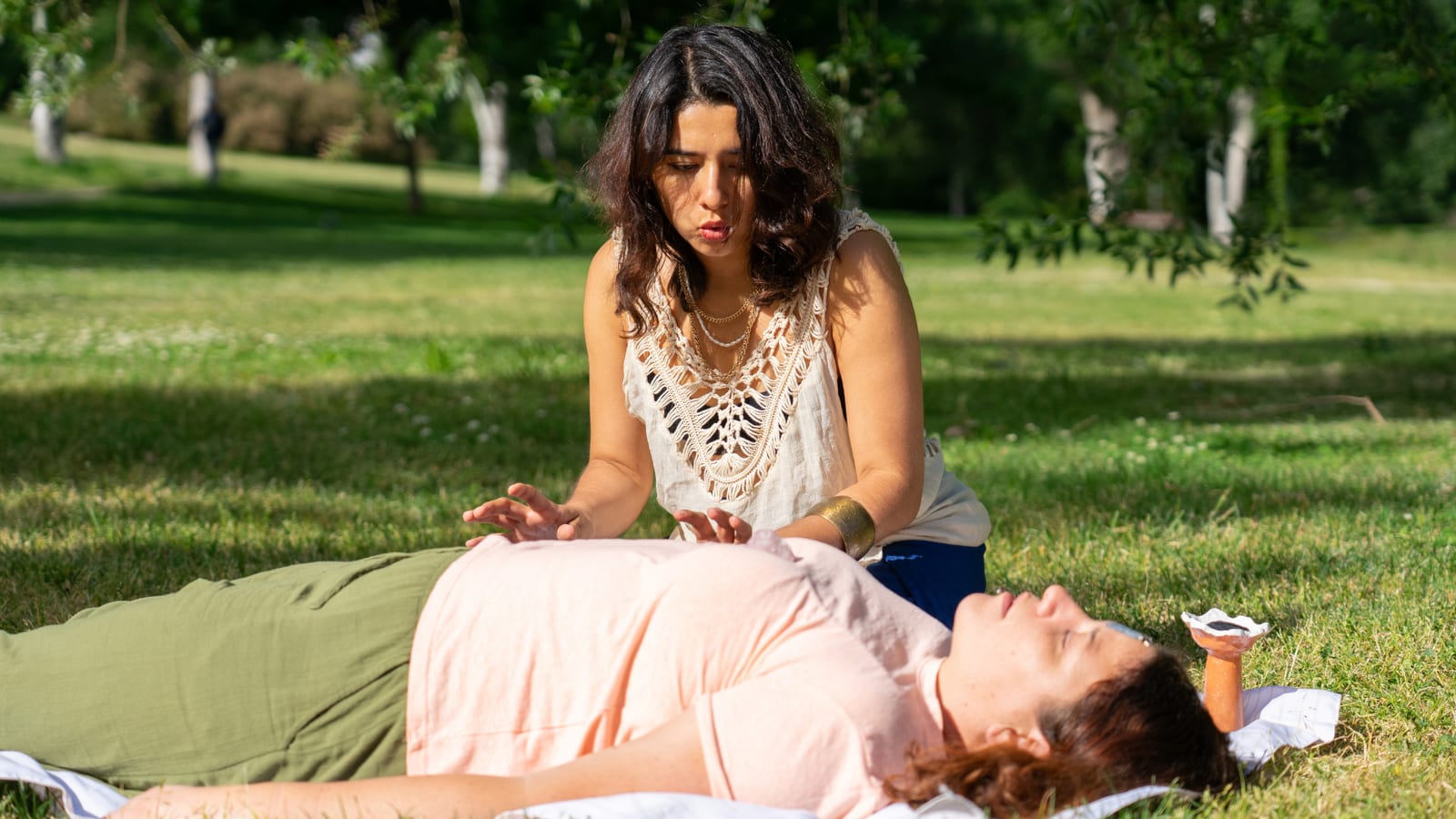
Restorative is the gentlest of the eight. Practitioners hold supported postures, often for ten or more minutes, with abundant props: bolsters under the back, blankets over the legs, blocks under the knees. The body is fully held, and the practitioner does very little active work. The aim is parasympathetic recovery and integration.
Restorative is for practitioners who are recovering from injury, depleted, or in a season of high stress and need their nervous system to come down. It is also a good practice for experienced practitioners who train hard in another modality and need recovery. The shadow side is that Restorative without intent becomes a nap, and a yoga nap is fine but is not the practice. Good Restorative teachers hold the room actively even though the practitioners are still.
The styles, side by side
The columns below are not a ranking. Each row describes the same dimension across the eight styles so a practitioner can read horizontally and see where their needs land.
| Style | Lineage | Pace | Best for | Class length | Difficulty |
|---|---|---|---|---|---|
| Vinyasa | Modern (1980s+), borrows from Ashtanga | Moderate to vigorous | Mobility, breath-movement, variety | 60–75 min | Moderate |
| Yin | Taoist + Hatha, systematized 1970s | Still, long holds | Deep tissue, internal stillness | 60–90 min | Internally demanding |
| Hatha | Classical (centuries old) | Slow to moderate | Foundations, beginners, alignment | 60–75 min | Beginner-friendly |
| Ashtanga | Pattabhi Jois (Mysore, 1960s) | Vigorous, fixed sequence | Discipline, strength, devotion | 75–90 min | Demanding |
| Iyengar | B.K.S. Iyengar (1950s+) | Slow, prop-supported | Precision, alignment, rehab | 75–90 min | Cognitively demanding |
| Kundalini | Yogi Bhajan (1969) | Variable, includes mantra | Energy work, meditation | 60–90 min | Energetically intense |
| Bikram | Bikram Choudhury (1970s) | Vigorous, in heat | Heat, sweat, fixed routine | 90 min | Demanding |
| Restorative | Iyengar lineage, modern adaptation | Slow, fully supported | Recovery, nervous system | 60–75 min | Physically gentle |
Pace is not difficulty. Yin held for an hour can be harder than Vinyasa, because the body cannot move out of what it meets.
How to choose
Three questions usually settle it.
The first is what the practitioner is seeking from the practice. If the answer is fitness, mobility, and breath, Vinyasa or Ashtanga. If the answer is alignment and precision, Iyengar. If the answer is meditative stillness, Yin or Restorative. If the answer is energy and altered states, Kundalini. If the answer is heat and discipline, Bikram. If the answer is "I don't know yet, I want to learn," Hatha.
The second is what the practitioner can actually sustain. A twice-weekly Yin practice is more sustainable for most people than a daily Ashtanga practice. The honest question is not which style is best, but which style the practitioner will actually return to.
The third question, and the most important, is teacher fit. Style is the second decision. The teacher is the first. A skilled Hatha teacher will produce a deeper practice for most practitioners than a mediocre Ashtanga teacher will, regardless of how the styles compare on paper.
Most serious practitioners eventually settle into two styles rather than one. A common pairing is Vinyasa or Ashtanga with Yin or Restorative: one practice that demands the body, one that quiets the mind. The body-led practice produces strength and discipline. The slower practice produces stillness and integration. Holding both prevents either from becoming one-dimensional.
If choosing a single teacher feels harder than choosing a style, that is because it is. A list of yoga schools in your city is easy to assemble. A list of teachers worth committing to is the work of months. This is the kind of question we hold with seekers. Naming the styles is the easy half. Naming the teacher is the rest of it. If you want help, the discovery call is where that conversation begins. If the modality side is what you want to map first, our piece on what a spiritual concierge actually does explains how the matching works.